
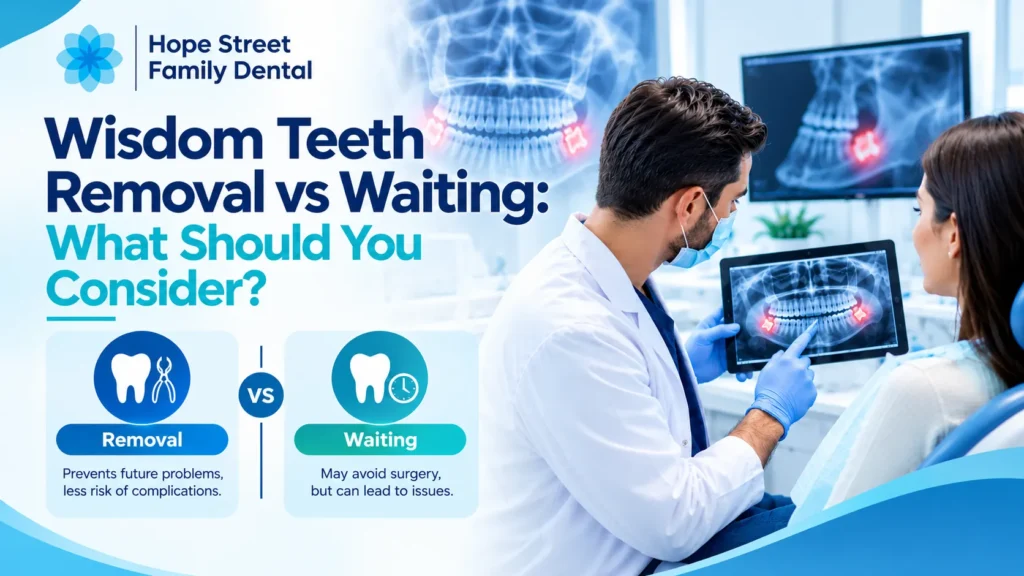
Wisdom teeth can cause uncertainty. You might notice pressure at the back of your jaw, occasional discomfort when chewing, or no symptoms at all. If your wisdom teeth are coming through, you may wonder whether removal is necessary or whether it is safe to leave them alone.
The short answer: Not every wisdom tooth needs to be removed. If a wisdom tooth is healthy, fully erupted, easy to clean and not causing problems, your dentist may recommend monitoring it. However, removal may be appropriate if it causes repeated infection, significant decay, damage to neighbouring teeth or other complications.
What Are Wisdom Teeth?
Wisdom teeth are the third molars at the very back of your mouth. Most people develop up to four wisdom teeth, although some develop fewer or none.
They commonly emerge during the late teenage years or early adulthood, but the timing varies. Sometimes there is insufficient room for them to come through properly.
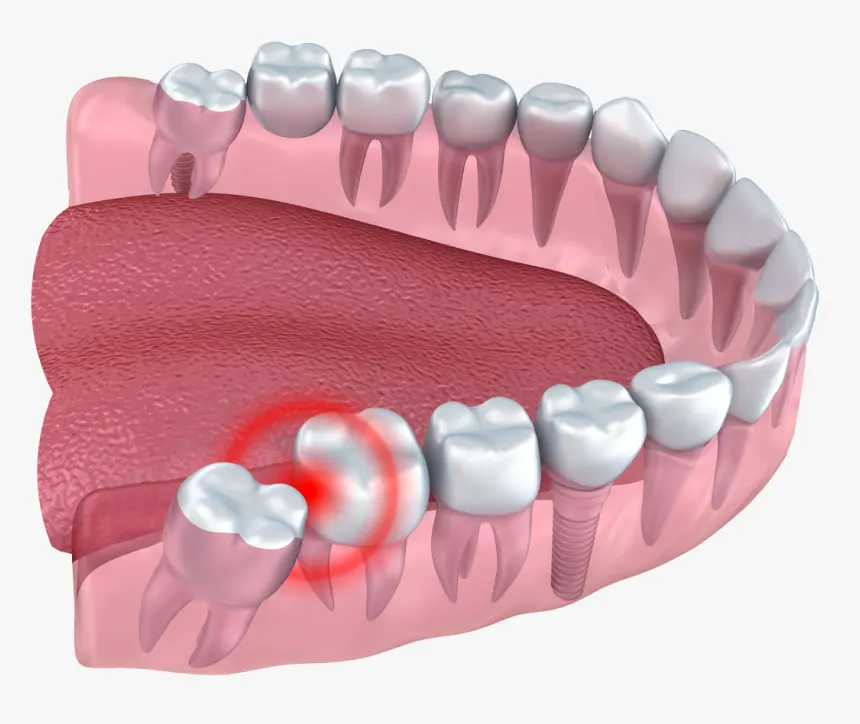
When a wisdom tooth cannot emerge fully, it may become impacted. It can remain partly covered by gum tissue or trapped beneath the gum or jawbone.
Impacted wisdom teeth do not always cause symptoms. However, their position can make cleaning difficult and increase the risk of certain dental problems.
Wisdom Teeth Removal vs Waiting: What Is the Difference?
The decision depends on the position of your wisdom teeth, your oral health, your symptoms and the likelihood of future complications.
Option 1: Having Your Wisdom Teeth Removed
Wisdom teeth removal involves taking out one or more wisdom teeth when a dental professional determines that treatment is appropriate.
Your dentist may recommend removal when a wisdom tooth is associated with problems such as:
- Repeated inflammation or infection around the tooth.
- Tooth decay that cannot be managed appropriately.
- Gum disease around the wisdom tooth or neighbouring molar.
- Damage to an adjacent tooth.
- A cyst or another abnormality associated with the tooth.
- Persistent symptoms that are attributable to the wisdom tooth.
Depending on the tooth’s position and the complexity of treatment, removal may be performed by a general dentist or an oral surgeon.
Potential benefits of wisdom teeth removal
Removing a problematic wisdom tooth may address the source of recurring symptoms and help prevent further damage associated with that tooth.
However, extraction is still a surgical procedure in many cases. Potential risks include pain, swelling, bleeding, infection, dry socket and, in some cases, injury to nearby nerves or structures. Your treating clinician can explain the risks specific to your situation.
Option 2: Waiting and Monitoring Your Wisdom Teeth
If your wisdom teeth are healthy and not causing problems, your dentist may recommend monitoring rather than immediate removal.
This approach can be suitable when the teeth are positioned well, can be cleaned properly and show no evidence of disease or damage.
Monitoring may involve regular dental check-ups, examination of the surrounding gums and teeth, and dental X-rays when clinically indicated.
Potential benefits of waiting
- Avoids an unnecessary extraction and its associated risks.
- Allows you to retain healthy natural teeth.
- Avoids immediate recovery time and procedure-related costs.
- Gives your dentist an opportunity to identify changes over time.
However, waiting does not mean ignoring your wisdom teeth. Symptoms can develop later, and a tooth that is difficult to clean may become problematic. Keeping up with dental reviews is important.
5 Factors to Consider Before Making a Decision
1. Are You Experiencing Pain or Swelling?
Pain at the back of the jaw may be related to wisdom teeth, but other dental conditions can produce similar symptoms.
If you experience recurring discomfort, swollen gums, difficulty chewing or tenderness around a wisdom tooth, arrange a dental assessment. These symptoms do not automatically mean you need an extraction, but they should not be ignored.
2. Is There Enough Room for the Tooth?
Some wisdom teeth emerge fully and sit in a position that allows effective cleaning. Others grow at an angle or remain partly trapped beneath the gums.
A poorly positioned tooth may create an area where food and bacteria collect. This can contribute to inflammation, decay or damage to the neighbouring molar.
A clinical examination and, when appropriate, dental imaging can help your dentist assess the tooth’s position.
3. Can You Clean the Area Properly?
Wisdom teeth are located far back in the mouth, which can make brushing and flossing difficult.
If plaque repeatedly accumulates around a wisdom tooth, you may be more likely to develop gum inflammation or tooth decay. Your dentist can assess whether the area can be maintained with good oral hygiene or whether its position creates an ongoing problem.
4. Is the Tooth Affecting the Neighbouring Molar?
A wisdom tooth can sometimes contribute to decay, gum problems or damage affecting the second molar in front of it.
This is particularly important because the neighbouring tooth may be valuable to your long-term oral health. If examination or imaging identifies damage, your dentist can explain the available treatment options.
5. What Do Your Dental Examination and X-Rays Show?
Symptoms alone cannot always determine whether wisdom teeth need removal. Some problematic teeth cause few symptoms, while jaw discomfort may have another cause.
Your dentist will consider your symptoms, medical and dental history, tooth position, gum health and any relevant imaging before discussing whether monitoring or removal is appropriate.
What Happens If You Leave Problematic Wisdom Teeth Untreated?
A wisdom tooth that is healthy and monitored appropriately may never need removal. However, a tooth associated with active disease can cause complications if the underlying problem is not treated.
Possible problems include:
- Pericoronitis: Inflammation or infection of the gum around a partially erupted wisdom tooth.
- Tooth decay: Cavities in the wisdom tooth or the neighbouring molar.
- Gum disease: Inflammation and damage to the tissues supporting the teeth.
- Damage to adjacent teeth: Problems caused by the position of the wisdom tooth.
- Cysts or other abnormalities: Uncommon problems that may be identified through examination or imaging.
The important distinction is between a healthy wisdom tooth that can be monitored and a tooth that is already causing, or is associated with a clinically significant risk of, disease.
What Is Recovery Like After Wisdom Teeth Removal?
Recovery varies according to the number of teeth removed, their position and the complexity of the procedure.
Some people experience mild discomfort, while others have more noticeable swelling and jaw stiffness for several days. Your dentist or oral surgeon will provide instructions tailored to your procedure.
General recovery advice may include:
- Follow your clinician’s instructions about pain relief and wound care.
- Choose soft foods initially and gradually return to your usual diet as comfort allows.
- Avoid smoking and vaping, which can interfere with healing.
- Avoid vigorous rinsing or disturbing the extraction site during the early healing period.
- Keep your mouth clean according to the instructions provided.
- Attend any recommended follow-up appointment.
Contact your dental provider if pain or swelling worsens rather than improves, or if you develop other concerning symptoms. Significant bleeding, fever, or increasing difficulty opening your mouth warrants prompt professional advice.
Seek emergency medical care if you have difficulty breathing or swallowing, or rapidly spreading swelling around your face or neck.
Is Wisdom Teeth Removal Always Better Than Waiting?
No. Removal is not automatically the best choice for every patient.
For a healthy wisdom tooth that is fully erupted, functional and easy to clean, monitoring may be appropriate. Conversely, a tooth causing repeated infection, decay or damage to a neighbouring tooth may require treatment.
The decision should be based on an individual assessment rather than age alone, a general rule that all wisdom teeth must be removed, or the presence or absence of pain by itself.
If you are unsure, ask your dentist to explain the benefits, risks and alternatives for your specific situation.
Wisdom Teeth Assessment in Brunswick
If you are experiencing wisdom tooth pain or wondering whether your wisdom teeth need to be removed, a dental assessment can help clarify your options.
At Hope Street Family Dental, patients in Brunswick can discuss wisdom tooth concerns, have their oral health assessed and receive advice about appropriate next steps. Where clinically indicated, your dentist may recommend dental imaging or referral to an oral surgeon for further assessment.
You do not necessarily need to wait until wisdom teeth become painful before asking about them. A routine dental check-up can help identify concerns and determine whether monitoring or treatment is appropriate.
Making the Right Decision: Removal vs. Waiting
Choosing between wisdom teeth removal and waiting comes down to your individual dental health. Some wisdom teeth can remain healthy and require only monitoring, while others need treatment to address infection, decay or damage.
If you have concerns about your wisdom teeth in Brunswick, speak with your dentist about the findings, available options and the risks and benefits of each approach. An informed decision can help you protect your oral health over the long term.
Frequently Asked Questions
No. Healthy wisdom teeth that are not causing disease and can be cleaned properly may be monitored. Removal is considered when there is a clinical reason to treat the tooth.
Sometimes. A lack of pain does not guarantee that a wisdom tooth is healthy, so regular dental examinations are important. Your dentist can check for problems that may not yet be causing symptoms.
Possible signs include pain at the back of the jaw, swollen or bleeding gums around a wisdom tooth, an unpleasant taste, difficulty chewing or repeated inflammation. These symptoms need assessment because other conditions can cause similar problems.
Not necessarily. Monitoring may be suitable for healthy wisdom teeth. However, delaying assessment or treatment when a tooth is causing infection, decay or damage may allow the problem to worsen. Seek advice if symptoms develop.
They consider your symptoms, oral health, the position of the teeth, the condition of surrounding tissues and any necessary dental imaging. They will then discuss the most appropriate options.
Arrange an assessment if pain persists, returns repeatedly, or occurs with swelling, an unpleasant taste or difficulty chewing. Seek urgent care for rapidly increasing swelling, fever with worsening symptoms or difficulty opening your mouth. Difficulty breathing or swallowing requires emergency medical attention.