
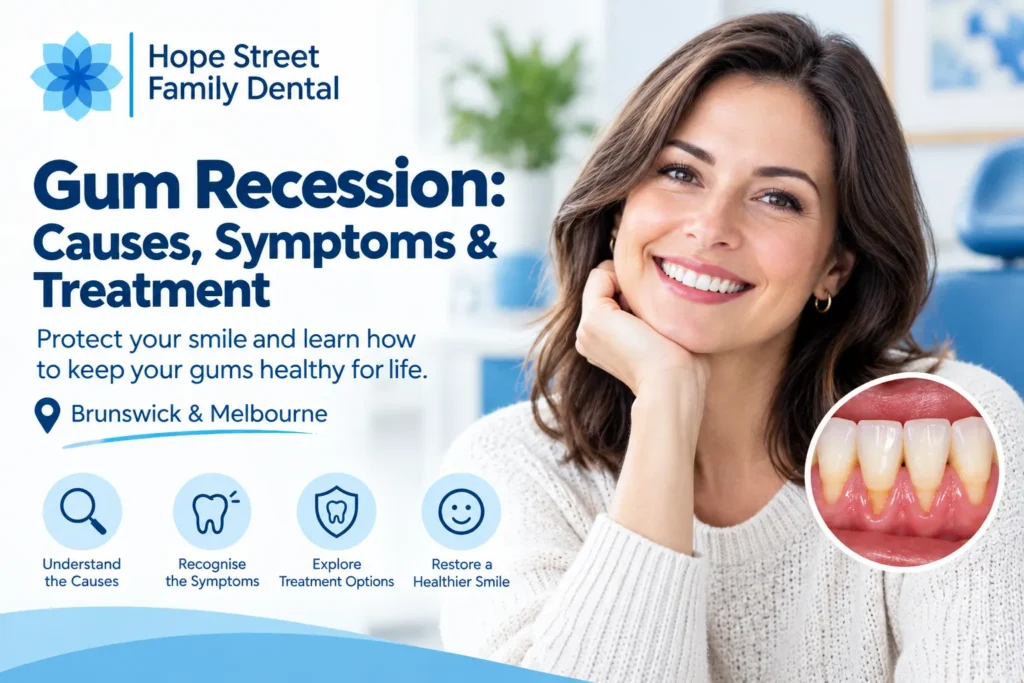
Have you noticed that your teeth look longer than they used to, or that your teeth feel sensitive when you drink something cold? These changes may be associated with gum recession, a condition in which gum tissue moves away from the tooth and exposes more of its surface, including the root.
Gum recession can develop gradually, and some people may not experience obvious symptoms in the early stages. Understanding the causes of a receding gum line can help you recognise potential problems and seek appropriate dental advice.
In this guide, I will explain what gum recession means, what causes receding gums, common symptoms, available treatment options and practical ways to protect your gum health.
Quick answer: Gum recession occurs when gum tissue pulls back from the tooth, exposing part of the tooth root. It can be associated with gum disease, aggressive brushing, gum tissue characteristics and other factors. Treatment depends on the underlying cause and aims to control the problem, protect exposed surfaces and prevent further progression.
What Is Gum Recession?
Gum recession, also called gingival recession, occurs when the gum margin moves away from its normal position around a tooth. This can expose the tooth root, which does not have the same enamel protection as the crown.
Exposed tooth roots may be more vulnerable to sensitivity, root surface decay and wear. Gum recession can affect one tooth or several teeth, and its severity varies between individuals.
A receding gum line does not necessarily mean that you have advanced gum disease. A dental examination is needed to identify the cause and assess whether there is any associated damage to the supporting tissues.
The Australian Dental Association explains that periodontal disease can cause gums to pull away from teeth, creating spaces where bacteria can collect.
What Causes Receding Gum Line?
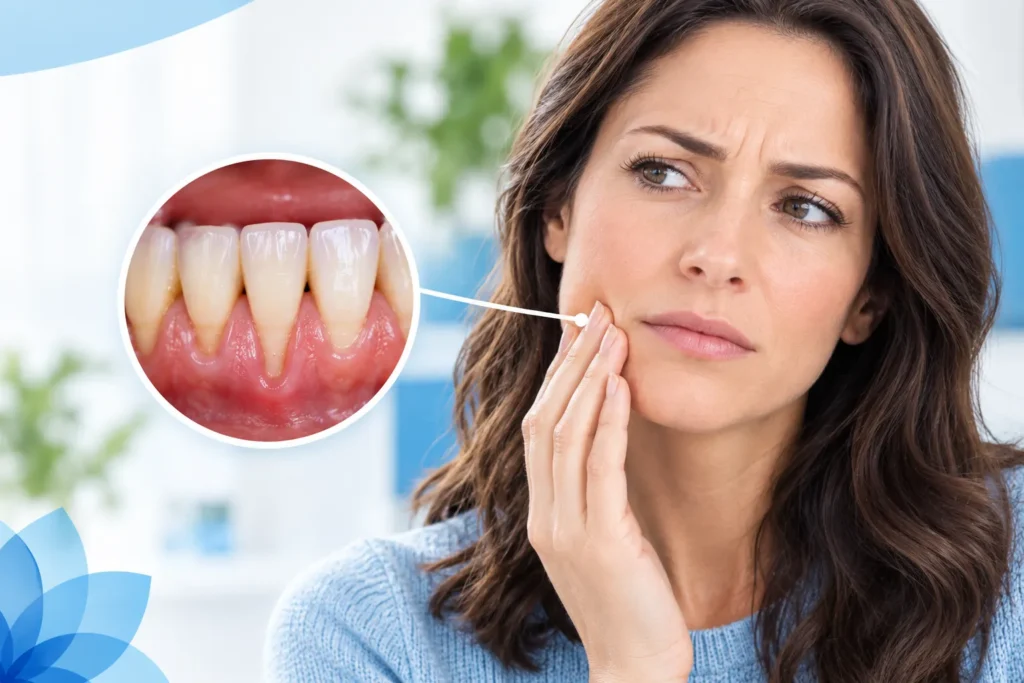
There is no single cause of gum recession. Several factors can contribute, and some people have more than one risk factor.
1. Gum Disease and Periodontitis
One of the important causes of gum recession is periodontal disease.
Plaque is a sticky layer of bacteria that forms on teeth. If it is not removed effectively, it can contribute to gum inflammation. Advanced gum disease, known as periodontitis, can damage the tissues and bone supporting the teeth.
As supporting tissues are lost, the gums may pull away from the teeth, exposing the roots.
Possible signs of gum disease include:
- Bleeding gums when brushing.
- Red or swollen gums.
- Persistent bad breath.
- Receding gums.
- Loose teeth.
- Changes in how your teeth feel when chewing.
Not everyone with gum recession has periodontitis, but persistent bleeding, gum changes or loose teeth should be assessed by a dental professional.
2. Brushing Your Teeth Too Aggressively
Brushing is essential for maintaining oral health, but excessive pressure or an unsuitable brushing technique may contribute to gum tissue damage.
Some people brush harder because they believe it will remove more plaque or whiten their teeth. However, forceful brushing is not necessary for effective plaque removal.
To protect your gum line:
- Use a soft-bristled toothbrush.
- Apply gentle pressure.
- Avoid scrubbing aggressively along the gum line.
- Ask your dentist to demonstrate an appropriate brushing technique.
3. Naturally Thin or Vulnerable Gum Tissue
Some people naturally have thinner gum tissue or anatomical features that make certain areas more susceptible to recession.
This means gum recession can sometimes occur even when someone follows a consistent oral hygiene routine.
Your dentist can assess the thickness and position of the gum tissue, the location of the recession and other contributing factors. This helps determine whether monitoring, preventive care or additional treatment may be appropriate.
4. Smoking and Tobacco Use
Smoking is associated with an increased risk of gum disease and can negatively affect gum health.
Tobacco use can contribute to periodontal problems, which may lead to damage of the tissues supporting the teeth. People who smoke should discuss their gum health and cessation support with their dental professional.
Stopping smoking can support overall health and reduce certain oral health risks, although existing gum recession may still require individual assessment.
5. Tooth Position and Orthodontic Factors
The position of a tooth and the surrounding gum and bone anatomy can influence susceptibility to gum recession.
In some cases, recession may be associated with tooth positioning or previous orthodontic treatment. This does not mean braces automatically cause gum recession; the relationship depends on individual anatomy, treatment and other risk factors.
If you notice recession around a tooth that is crowded, rotated or positioned outside the surrounding gum tissue, your dentist can assess the area and determine whether further evaluation is necessary.
6. Local Trauma or Irritation
Repeated irritation or injury to gum tissue can contribute to recession in some situations.
Potential examples include trauma from oral habits, certain piercings or other local factors. The effect varies depending on the type, frequency and location of the irritation.
If you have noticed gum recession around one particular tooth, mention any local habits or sources of irritation during your dental appointment.
Common Signs and Symptoms of Gum Recession
Gum recession can develop without significant pain, so changes in appearance or sensitivity should not be ignored.
Common signs include:
- Teeth appearing longer: The gum margin may move downward or away from the tooth, making more of the tooth visible.
- Tooth sensitivity: Exposed root surfaces may cause discomfort when exposed to cold, heat, sweet foods or touch.
- Visible changes around the gum line: You may notice a notch near the gum margin, exposed root surface or uneven gum levels.
- Bleeding or inflamed gums: Bleeding, redness or swelling may indicate gum inflammation or periodontal disease.
Some people experience sensitivity without significant recession, and some people have recession without noticeable symptoms. A dental examination helps distinguish between possible causes.
Can Receding Gums Grow Back?
No, gum tissue that has been lost through recession generally does not grow back naturally.
However, this does not mean that every case will continue to worsen or that treatment is impossible.
The appropriate approach depends on the cause and severity of the recession. Preventive care and treatment can help manage the contributing factors, reduce the risk of further damage and, in selected cases, restore coverage of an exposed root.
Treatment should be tailored to the individual rather than relying on home remedies or products that promise to regrow gum tissue.
How Is Gum Recession Diagnosed?
A dentist will assess the gums, teeth and supporting structures to identify the likely cause of recession.
During an examination, they may:
- Inspect the gum line and exposed tooth surfaces.
- Measure gum recession and periodontal pocket depths.
- Check for plaque and tartar accumulation.
- Assess gum inflammation and signs of periodontal disease.
- Evaluate tooth position, sensitivity and other local factors.
- Recommend dental X-rays when appropriate to assess supporting bone.
The assessment helps determine whether the issue is related to gum disease, local trauma, tooth positioning or another contributing factor.
Gum Recession Treatment Options
The best treatment for gum recession depends on the underlying cause, the amount of tissue loss and whether the tooth or surrounding structures are affected.
1. Improved Oral Hygiene and Preventive Care
If plaque accumulation or brushing technique contributes to gum problems, your dentist may recommend changes to your daily oral hygiene routine.
This may include:
- Gentle brushing twice daily with fluoride toothpaste.
- Daily cleaning between teeth.
- Professional removal of plaque and tartar when required.
- Guidance on cleaning techniques.
- Regular dental examinations and maintenance.
Good oral hygiene supports gum health, but it cannot replace professional treatment when periodontal disease or significant recession is present.
2. Periodontal Treatment for Gum Disease
When gum recession is associated with periodontitis, treatment focuses on controlling the disease and reducing further damage to the supporting tissues.
Depending on the findings, periodontal care may include professional cleaning, treatment of affected root surfaces, personalised oral hygiene instruction and ongoing maintenance.
In more advanced cases, a periodontist may recommend additional procedures. The Australian Dental Association describes periodontal treatment as a stepwise process that may include non-surgical treatment, reassessment and further treatment where necessary.
3. Managing Tooth Sensitivity
Exposed roots can cause sensitivity because the root surface lacks the protective enamel covering the tooth crown.
Your dental professional may recommend suitable desensitising products, fluoride treatments or other measures based on the cause and severity of your symptoms.
Sensitivity should not automatically be attributed to gum recession. Tooth decay, cracks and other dental problems can also cause similar symptoms, so persistent discomfort needs an appropriate assessment.
4. Gum Grafting or Other Surgical Treatment
In selected cases, a dentist with appropriate training or a periodontist may recommend gum grafting or another surgical approach.
These procedures may be considered to improve root coverage, address specific tissue concerns or protect vulnerable areas. Suitability depends on factors such as recession severity, tissue characteristics, oral health and treatment goals.
Not everyone with gum recession requires surgery. A dentist must assess the individual situation before recommending a procedure.
How to Prevent Gum Line Recession from Getting Worse?
Although some risk factors cannot be changed, several daily habits can support gum health.
- Brush gently
- Use a soft toothbrush and avoid excessive pressure.
- Clean between your teeth
- Use floss or other suitable interdental cleaning methods to remove plaque from areas a toothbrush cannot reach.
- Attend regular dental check-ups
- Professional assessment can help identify gum inflammation and other concerns.
- Avoid smoking
- Seek support to stop smoking and discuss your gum health with a dental professional.
- Address symptoms early
- Do not ignore persistent bleeding, sensitivity, gum changes or loose teeth.
Regular oral hygiene and dental care can help prevent and manage gum disease.
When Should You Visit a Dentist for Receding Gums?
Consider arranging a dental examination if you notice:
- Gums that appear to be moving away from your teeth.
- Persistent tooth sensitivity.
- Bleeding or swollen gums.
- A tooth that feels loose.
- Pain or discomfort around the gum line.
- A visible change in gum position.
Seek urgent dental or medical care for severe oral swelling, uncontrolled bleeding or symptoms that affect breathing.
For patients in Brunswick, an examination at a local dental practice can help identify the cause of gum recession and determine the appropriate next steps.
Conclusion: Protect Your Gum Health
Gum recession can develop for several reasons, from gum disease and aggressive brushing to individual tissue characteristics and local factors. Recognising the signs early can help you seek an appropriate assessment and understand the available treatment options.
If you have noticed a receding gum line, persistent sensitivity or changes in your gums, speak with a qualified dental professional. A personalised examination can help determine the cause and guide your next steps.
At Hope Street Family Dental, we provide comprehensive dental care for patients in Brunswick and surrounding areas. Our dental team can assess concerns such as gum recession, gum disease, tooth sensitivity and other oral health problems, then recommend care based on your individual needs.
Frequently Asked Questions About Gum Recession
A receding gum line can be caused by periodontal disease, aggressive brushing, naturally thin gum tissue, local irritation, tooth positioning and other contributing factors. The specific cause should be determined through a dental examination.
Gum recession can increase sensitivity and expose the tooth root. If it is associated with periodontal disease, there may also be damage to the supporting tissues. The seriousness depends on the extent of recession, its cause and whether supporting bone has been affected.
Lost gum tissue generally does not grow back naturally. However, appropriate preventive care and professional treatment may help manage the cause and prevent further progression. Some patients may be candidates for procedures that improve root coverage.
Aggressive brushing can contribute to gum tissue damage. Gentle brushing with a soft toothbrush and appropriate technique can help protect the gum line.
Yes. When gum recession exposes the tooth root, sensitivity to cold, heat, sweet foods or touch may occur. Other dental problems can also cause sensitivity, so persistent symptoms should be assessed.
The appropriate steps depend on the cause. They may include gentle brushing, cleaning between teeth, managing gum disease, avoiding smoking and following an individualised dental care plan.