
A small chip, uneven tooth edge or noticeable gap can make you more conscious of your smile, even when your teeth are otherwise healthy. Cosmetic dental bonding is one option dentists may use to improve the shape or appearance of selected teeth without the more extensive treatment associated with some other cosmetic procedures.
But is dental bonding right for you? How much does it cost? How long does it last? And is it better than veneers?
This guide explains cosmetic dental bonding, including how it works, what it can address, potential advantages and limitations, costs, insurance considerations and how to care for bonded teeth.
For patients considering cosmetic dentistry in Brunswick or Melbourne, understanding these factors can help you have a more informed conversation with your dentist.
What Is Cosmetic Dental Bonding?
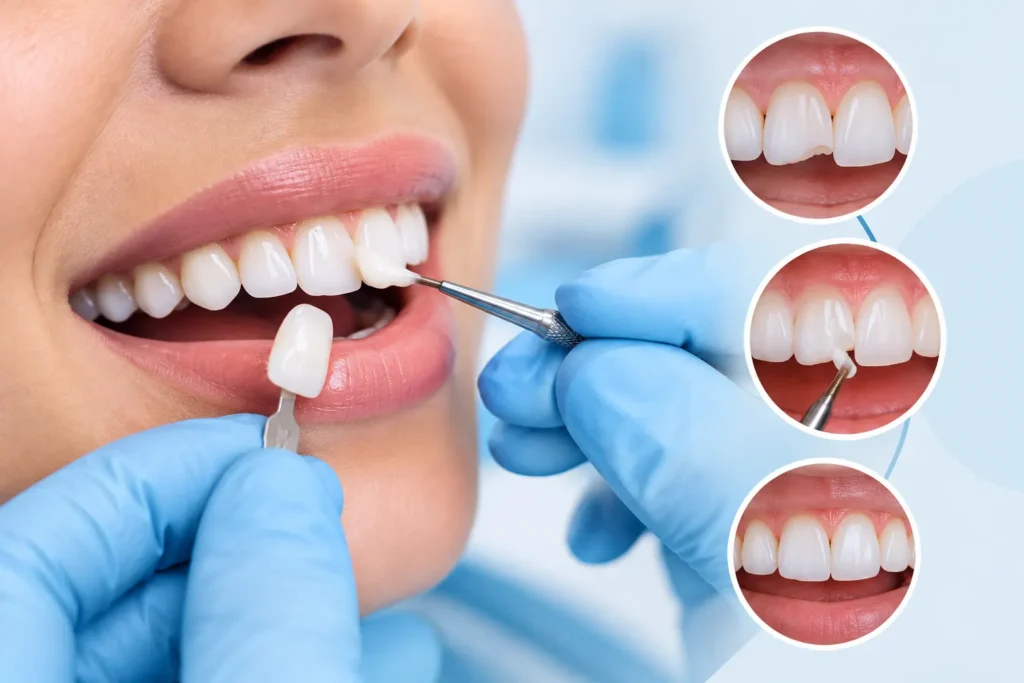
Cosmetic dental bonding is a dental procedure in which tooth-coloured composite resin is applied, shaped and bonded to a tooth to improve its appearance or restore a minor defect.
The composite resin can be carefully sculpted to alter the apparent shape, size or contour of a tooth. Once the material is positioned, it is hardened using a curing light and then shaped and polished.
Composite resin is also widely used for tooth-coloured dental restorations. Healthdirect describes composite resin as a tooth-coloured material that can be bonded to teeth and matched with the colour of surrounding teeth.
The exact approach depends on the tooth, your bite, your oral health and the result you want to achieve.
What Can Cosmetic Dental Bonding Fix?
Cosmetic dental bonding is generally best suited to small or moderate aesthetic changes, although suitability varies from patient to patient.
Your dentist may consider bonding for concerns such as:
- Minor chips
- Small gaps between teeth
- Uneven tooth edges
- Teeth that appear slightly short
- Minor shape irregularities
- Worn or uneven edges
- Some forms of discolouration
- Small cosmetic imperfections
For example, if one front tooth has a small chip, composite resin may be shaped onto the affected area to restore its contour.
Similarly, carefully placed bonding may sometimes be used to make teeth appear more symmetrical or to reduce the appearance of a small gap.
However, bonding isn’t automatically the best treatment for every cosmetic concern. Larger fractures, extensive damage, significant changes in tooth position or certain bite problems may require another approach.
How Does Cosmetic Dental Bonding Work?
One of the attractions of dental bonding is that the treatment can often be completed relatively quickly. The exact process varies according to the case.
1. Consultation and assessment
Your dentist first assesses your teeth, gums, bite and overall oral health.
This is important because cosmetic treatment should not be considered in isolation from your dental health.
If you have untreated tooth decay, significant gum disease or another dental problem, that issue may need to be addressed before cosmetic bonding.
2. Shade selection
Your dentist selects a composite shade intended to blend with your natural teeth.
If you are considering teeth whitening as well, it is worth discussing this before bonding because composite resin does not whiten in the same way as natural tooth structure.
3. Tooth preparation
The tooth is prepared so that the composite resin can be placed appropriately.
Depending on the situation, preparation may be minimal.
4. Composite resin placement
The dentist applies tooth-coloured composite resin to the selected area.
5. Sculpting and shaping
This is where clinical skill becomes particularly important.
The dentist shapes the material to create an appropriate contour, proportion and transition with the surrounding tooth.
6. Curing
A dental curing light is used to harden the composite resin.
7. Finishing and polishing
The bonded area is refined and polished to create a smooth surface and natural appearance.
Healthdirect similarly describes direct composite resin restorations as material that can be applied to a tooth, shaped and finished by a dental professional.
Is Cosmetic Dental Bonding Painful?
Cosmetic dental bonding is generally considered a relatively conservative dental procedure, and whether local anaesthetic is needed depends on the tooth and the type of treatment being performed.
For simple cosmetic reshaping, anaesthetic may not always be necessary.
However, if bonding is being combined with restorative treatment or the tooth requires preparation, your dentist may recommend local anaesthetic.
If you are concerned about dental treatment or sensitivity, discuss this with your dentist before the procedure.
How Long Does Cosmetic Dental Bonding Last?
One of the most common questions Brunswick locals ask is:
How long does cosmetic dental bonding last?
There is no single lifespan that applies to every patient.
The longevity of composite bonding depends on factors including:
- The location of the tooth
- How much composite has been placed
- Your bite
- Whether you grind or clench your teeth
- Eating and chewing habits
- Oral hygiene
- Exposure to staining foods and drinks
- The quality of the restoration
- The amount of stress placed on the bonded area
Clinical research shows that anterior composite restorations can have good longevity, but outcomes vary between restoration types and patients. Fracture and aesthetic changes such as staining or altered appearance are among the reasons restorations may eventually require repair or replacement.
This is why it is better to think of bonding as a maintainable dental restoration rather than a permanent material that will never need attention.
What Can Make Dental Bonding Chip or Wear?
Composite resin is strong, but it is not indestructible.
Bonding may be more vulnerable to damage if you:
- Bite fingernails
- Chew pens or other objects
- Regularly bite very hard foods with bonded front teeth
- Grind or clench your teeth
- Use your teeth to open packaging
- Put excessive force on a bonded edge
A systematic review of direct anterior composite restorations found fracture to be an important cause of restoration failure.
If you grind your teeth, tell your dentist before treatment. Your bite and grinding habits may influence whether bonding is an appropriate option and how it should be managed.
Does Cosmetic Dental Bonding Stain?
Composite resin can become stained or lose some of its original surface appearance over time.
This can be more noticeable in people who frequently consume strongly coloured foods and drinks or use tobacco products.
Coffee, tea, red wine and other staining substances can affect the appearance of dental restorations over time.
Good oral hygiene and regular dental maintenance can help keep bonded teeth looking their best.
It is also important to understand that bonding does not behave exactly like natural enamel when it comes to whitening. If you are considering professional teeth whitening and cosmetic bonding, discuss the order of treatment with your dentist.
How Much Does Cosmetic Dental Bonding Cost?
There is no single national price for cosmetic dental bonding in Australia.
The cost can depend on:
- Number of teeth treated
- Amount of composite resin required
- Complexity of the case
- Whether tooth reshaping is required
- Whether other dental treatment is needed first
- The dentist’s experience and treatment approach
- Whether the bonding is cosmetic or restorative
Current published Australian prices illustrate this variation. For example, some Melbourne-area and Brunswick practices currently list composite/cosmetic bonding around $499–$550 per tooth, while other Australian practices publish broader ranges. These figures are examples from individual practices, not a standard Australian fee or a Hope Street Family Dental price.
How much is cosmetic dental bonding per tooth?
A single-tooth case will generally cost less than treating multiple teeth, but the fee depends on the complexity and treatment plan.
For an accurate price, patients should have an examination and receive a treatment estimate from a local dental practice.
Does Dental Insurance Cover Cosmetic Bonding?
This is another important question for Australian patients.
Private health insurance may provide dental benefits through extras/general treatment cover, but whether cosmetic bonding is covered depends on your specific policy, the relevant dental item and how the treatment is classified.
Some policies have waiting periods, annual limits and different benefits for general and major dental treatment. PrivateHealth.gov.au shows that dental benefits vary substantially between policies.
If bonding is being performed primarily for cosmetic purposes, don’t assume that your health fund will pay a benefit.
Before treatment, ask your insurer:
- Is this treatment covered under my extras policy?
- What dental item number will be used?
- What percentage or fixed benefit applies?
- Is there a waiting period?
- What annual limit remains?
- Is cosmetic treatment excluded?
Your dental practice can provide the relevant treatment information so you can check with your health fund.
Is Cosmetic Dental Bonding Covered by Medicare?
For most Australian adults, Medicare does not cover most dental services. Services Australia specifically lists most dental services among services Medicare does not pay for.
This means patients should not assume cosmetic dental bonding will receive a Medicare benefit.
Private health insurance may provide some assistance depending on your cover, but this needs to be confirmed with your insurer.
Dental Bonding vs Veneers: What’s the Difference?
Bonding and veneers can both improve the appearance of teeth, but they are not the same treatment.
Cosmetic dental bonding
Bonding uses composite resin that is applied directly to the tooth and sculpted into the desired shape.
Potential advantages include:
- Conservative treatment
- Direct application
- Often relatively quick
- Can address selected minor imperfections
- Can sometimes be repaired rather than completely replaced
Veneers
Veneers are thin coverings attached to the front of teeth. They may be made from porcelain or composite resin.
Veneers can be appropriate for some patients seeking more extensive changes to tooth colour, shape or appearance.
However, treatment choice should be based on your teeth, oral health, bite, aesthetic goals and long-term considerations—not simply which option is more popular.
Is Dental Bonding Better Than Veneers?
Neither is universally better.
The more appropriate option depends on what you want to change.
Bonding may make sense when the concern is relatively small and a conservative approach is appropriate.
Veneers may be considered when broader changes to the appearance of several teeth are desired.
Your dentist should explain the advantages, limitations, expected maintenance and alternatives before you decide.
Can Dental Bonding Close Gaps?
Yes, cosmetic dental bonding can sometimes be used to reduce the appearance of small gaps between teeth.
However, the size and location of the gap matter.
If the space is caused by tooth position, missing teeth, gum disease or another underlying problem, simply adding composite may not address the cause.
Orthodontic treatment may sometimes be more appropriate when tooth movement is the main issue.
Can Dental Bonding Fix Chipped Teeth?
Yes, minor chips are one of the common reasons composite bonding may be considered.
The dentist can use tooth-coloured composite resin to rebuild part of the tooth and recreate its shape.
However, a larger fracture may require a different restoration depending on how much tooth structure has been lost and whether the tooth has been weakened.
Can Dental Bonding Make Teeth Look Longer?
It can sometimes be used to add composite resin to the edge of a tooth, making it appear longer or changing its proportions.
But tooth length should be considered alongside your bite, gum position, tooth proportions and smile design.
Adding material without considering function can increase the risk of premature wear or fracture.
Does Dental Bonding Damage Natural Teeth?
One of the reasons patients consider bonding is that it can often be performed conservatively.
Unlike some treatments that require significant tooth preparation, direct composite bonding may involve little or no removal of healthy enamel in suitable cases.
However, the exact preparation depends on the clinical situation.
The important question is not simply whether bonding is “good” or “bad” for teeth, but whether it is appropriate for your individual tooth and oral health.
Who Is a Good Candidate for Cosmetic Dental Bonding?
You may be a candidate if you have:
- Healthy teeth and gums
- Minor chips or irregularities
- Small gaps
- Uneven tooth edges
- Localised cosmetic concerns
- Realistic expectations about what bonding can achieve
Bonding may be less suitable where there is:
- Significant tooth decay
- Active gum disease
- Major structural damage
- Severe tooth wear
- Uncontrolled grinding
- Significant bite problems
Your dentist can assess these factors before recommending treatment.
How Do You Look After Cosmetic Dental Bonding?
Good maintenance can help protect your bonded teeth.
- Brush twice a day: Use fluoride toothpaste and a suitable toothbrush.
- Clean between your teeth: Floss or use another dentist-recommended interdental cleaning method.
- Avoid using your teeth as tools: Don’t use bonded teeth to open packets, cut objects or hold hard items.
- Be careful with very hard foods: Especially if bonding has been placed on the edges of front teeth.
- Manage teeth grinding: If you clench or grind your teeth, ask your dentist whether additional protection is appropriate.
- Attend regular dental check-ups: Your dentist can monitor the bonding and surrounding teeth and identify early changes such as wear, staining, chipping or decay.
Cosmetic Dental Bonding in Brunswick and Melbourne
For people searching for cosmetic dental bonding in Brunswick, location is only one part of choosing a dental practice.
A good consultation should involve more than simply asking how much bonding costs.
Your dentist should assess:
- Your natural tooth shape
- Tooth colour
- Gum health
- Bite
- Existing restorations
- Tooth wear
- Your cosmetic goals
- Whether bonding or another treatment is more appropriate
This is particularly important if you are considering treatment for several front teeth, where small differences in shape and proportion can influence the overall appearance of your smile.
Hope Street Family Dental provides comprehensive dental care in Brunswick for patients seeking general, restorative and cosmetic dental treatment. If you are considering cosmetic dental bonding, the dental team can assess your teeth, discuss your goals and explain whether bonding is a suitable option for your individual needs.
Patients from Brunswick and surrounding Melbourne suburbs can discuss their cosmetic concerns with the dental team before deciding on treatment.
Frequently Asked Questions About Cosmetic Dental Bonding
Some private health insurance policies may provide dental benefits, but cosmetic treatment may be excluded or classified differently. Check your individual extras policy, waiting periods and annual limits before treatment.
Medicare generally does not cover most dental services, so patients should not assume cosmetic bonding will be covered.
Bonding is generally a conservative procedure. Whether local anaesthetic is needed depends on the tooth and the treatment being performed.
Yes. Composite bonding can be used for selected minor chips and can restore the appearance and contour of the tooth.