
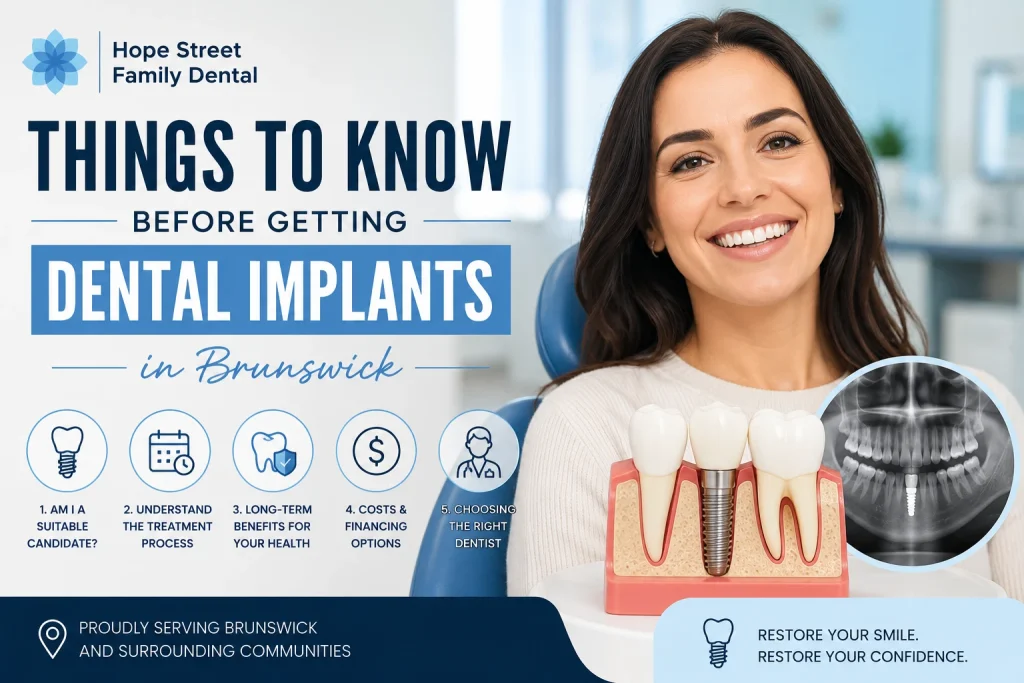
Missing teeth can affect much more than your smile. They can impact your ability to eat comfortably, speak clearly, maintain good oral health, and feel confident in social and professional situations.
As a result, many Brunswick residents are considering dental implants as a long-term solution for replacing missing teeth. Dental implants have become one of the most advanced and predictable tooth replacement options available in modern dentistry.
However, getting dental implants is a significant decision, and understanding the process before treatment begins can help you make a more informed choice.
If you’re considering dental implants in Brunswick, here are five important things you should know before starting treatment.
Why More Brunswick Residents Are Choosing Dental Implants?
As dental technology continues to advance, more Brunswick residents are exploring dental implants as a reliable and long-lasting tooth replacement solution.
Patients often appreciate:
- Natural appearance
- Improved chewing ability
- Enhanced comfort
- Fixed, secure replacement teeth
- Long-term oral health benefits
With modern digital planning and advanced implant techniques, treatment is now more precise and predictable than ever before.
5 Things You Should Know Before Getting Dental Implants in Brunswick
1. Not Everyone Is an Immediate Candidate for Dental Implants
One of the biggest misconceptions about dental implants is that everyone can receive them immediately after losing a tooth.
While dental implants are suitable for many patients, successful treatment depends on several factors, including:
- Overall oral health
- Gum health
- Bone density and volume
- Medical history
- Smoking status
- Existing dental conditions
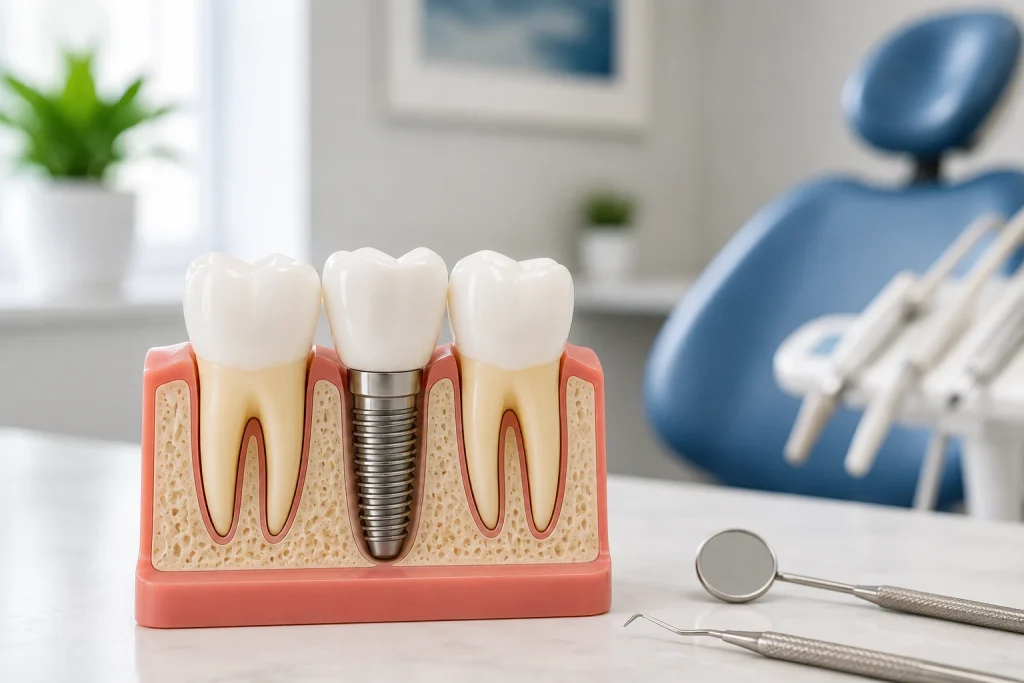
Dental implants work by placing a titanium post into the jawbone, which acts as an artificial tooth root. For this process to be successful, there needs to be enough healthy bone to support the implant.
If you’ve been missing a tooth for several years, some bone loss may have already occurred. Fortunately, this doesn’t necessarily rule out treatment. In many cases, procedures such as bone grafting can help prepare the area for implant placement.
A comprehensive dental assessment and 3D imaging scan can determine whether implants are the right solution for your individual situation.
What This Means for Brunswick Patients?
If you’ve recently lost a tooth, seeking advice sooner rather than later may help preserve bone and increase your treatment options.
2. Dental Implants Are Designed to Last for Many Years
Many patients ask:
“How long do dental implants last?”
When properly planned, placed and maintained, dental implants can provide a long-term solution for missing teeth.
Unlike dentures or bridges, implants integrate with the jawbone through a process called osseointegration. This creates a strong foundation for replacement teeth.
Several factors influence implant longevity, including:
- Oral hygiene habits
- Gum health
- Smoking
- Regular dental check-ups
- Bite forces
- Overall health
While the implant itself can often last for decades, the restoration attached to it (such as a crown) may require maintenance or replacement over time.
For many Brunswick patients looking for a stable, fixed solution, dental implants offer advantages that removable alternatives may not provide.
3. The Treatment Process Takes Time
Dental implants are not typically completed in a single appointment.
The process involves several stages designed to maximise long-term success.
Initial Consultation
Your dentist will evaluate:
- Oral health
- Bone levels
- Gum condition
- Medical history
- Treatment goals
Treatment Planning
Advanced digital imaging and 3D scans help create a precise treatment plan.
Implant Placement
The implant is surgically placed into the jawbone.
Healing Period
Over the following months, the implant gradually fuses with the surrounding bone.
Final Restoration
Once healing is complete, a custom-made crown, bridge or denture is attached to the implant.
Depending on your individual case, treatment may take several months from start to finish.
Although this may seem like a lengthy process, the healing phase is essential for creating a strong and stable foundation.
Why Patience Matters
Patients who understand the treatment timeline often feel more confident and prepared throughout their implant journey.
4. Dental Implants Help Preserve Jawbone and Facial Structure
One of the lesser-known benefits of dental implants is their ability to support jawbone health.
When a tooth is lost, the jawbone in that area no longer receives stimulation from chewing forces.
Over time, this can lead to:
- Bone loss
- Changes in facial appearance
- Shifting teeth
- Bite problems
Traditional dentures and bridges replace missing teeth but do not replace the tooth root.
Dental implants are unique because they function similarly to natural tooth roots, helping to stimulate the jawbone and reduce bone loss.
For many Brunswick patients, preserving long-term oral health is just as important as restoring appearance.
Dental implants provide benefits that extend beyond aesthetics.
5. Choosing the Right Implant Dentist Matters
Dental implant treatment combines surgical planning, restorative dentistry and long-term maintenance.
The success of treatment depends not only on the implant itself but also on:
- Accurate diagnosis
- Comprehensive planning
- Clinical experience
- Advanced technology
- Ongoing care
When researching dental implants in Brunswick, consider asking:
- How is treatment planned?
- Is 3D imaging used?
- What implant systems are offered?
- What experience does the dentist have with implant cases?
- What aftercare is provided?
A personalised treatment plan should address both function and aesthetics while considering your long-term oral health goals.
Why Hope Street Family Dental Stands Out for Dental Implants in Brunswick
At Hope Street Family Dental, we understand that replacing missing teeth is about more than restoring a smile. It’s about restoring confidence, function and quality of life.
Led by Principal Dentist Dr Aziz Baluch, our practice combines modern technology, detailed treatment planning and personalised care to help patients make informed decisions about dental implant treatment.
Our approach includes:
- Comprehensive implant consultations
- Advanced digital imaging and 3D scanning
- Personalised treatment planning
- Digital Smile Design
- Patient-centred care
- Focus on long-term oral health outcomes
Every patient receives a customised treatment plan designed to achieve natural-looking and functional results.
Taking the Next Step Towards a Healthier Smile
Dental implants can be a life-changing investment in your oral health and confidence. However, understanding the process, benefits and considerations beforehand is essential for making the right decision.
If you’re considering dental implants in Brunswick, taking the time to learn about your options and seeking professional advice can help ensure the best possible outcome.
With proper planning and ongoing care, dental implants can provide a durable, comfortable and natural-looking solution for missing teeth for many years to come.
Common Questions Brunswick Patients Ask About Dental Implants
Most patients report that implant placement is more comfortable than expected. Local anaesthetic is used during treatment, and post-operative discomfort is typically manageable with appropriate care.
The dental implants cost in Brunswick varies depending on factors such as:
Number of implants required
Bone grafting requirements
Type of restoration
Complexity of treatment
A consultation is the best way to receive an accurate treatment estimate.
Smoking may increase the risk of implant complications and affect healing. However, some smokers may still be suitable candidates after a thorough assessment.
Dental implants should be cared for similarly to natural teeth through:
Daily brushing
Flossing
Professional dental cleans
Regular dental examinations
Each treatment option has advantages and limitations. The most appropriate solution depends on your oral health, lifestyle, budget and treatment goals.