
A child’s smile goes through many changes as baby teeth emerge, permanent teeth begin to appear and their jaw develops. During these important years, children can experience dental problems that affect their comfort, eating habits, sleep and long-term oral health.
For parents in Brunswick, knowing what to look for can make it easier to recognise early warning signs and establish healthy dental habits at home. Some childhood dental problems are preventable, while others benefit from early professional assessment.
In this guide, we explore seven common dental problems in children, their possible causes, warning signs and practical prevention tips for Brunswick families.
What Are the Most Common Dental Problems in Children?
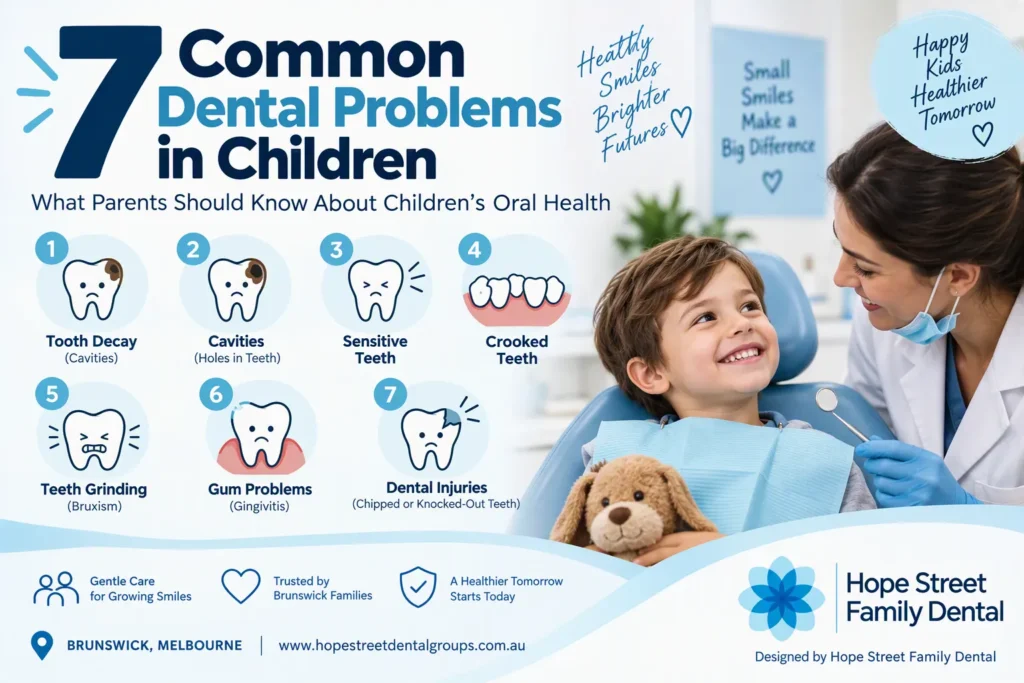
The seven common dental problems affecting children include:
- Tooth decay and cavities
- Toothache and tooth sensitivity
- Gum inflammation and bleeding gums
- Bad breath
- Teeth grinding during sleep
- Thumb-sucking and crooked teeth
- Chipped, broken or knocked-out teeth
Understanding these problems can help parents recognise when their child may need dental care and which everyday habits can help protect their teeth.
1. Tooth Decay and Cavities
Tooth decay is one of the most common dental problems in children. It develops when bacteria in dental plaque use sugars from food and drinks to produce acids that gradually damage tooth enamel.
Children may be more likely to develop cavities if they frequently consume sugary snacks, drink sweetened beverages, miss regular brushing sessions or struggle to clean their teeth thoroughly.
What Are the Warning Signs of Cavities in Children?
Early tooth decay may not cause noticeable symptoms. As it progresses, parents may observe:
- White or chalky patches on the teeth
- Brown or dark spots
- Small holes or visible damage
- Sensitivity when eating or drinking
- Toothache or discomfort when chewing
Baby teeth can develop cavities just like permanent teeth. Although baby teeth eventually fall out, decay can still cause pain, infection and difficulty eating.
How Can Brunswick Parents Help Prevent Cavities?
A consistent oral hygiene routine is one of the most effective ways to reduce the risk of tooth decay.
- Brush your child’s teeth twice daily with fluoride toothpaste appropriate for their age.
- Supervise brushing and help younger children clean all tooth surfaces.
- Encourage water as the main everyday drink.
- Limit frequent sugary snacks, lollies, juice and soft drinks.
- Arrange regular dental check-ups to monitor your child’s oral health.
Parents should not wait for a child to complain of toothache before arranging a dental examination. A children dentist can identify early signs of decay that may not be visible at home.
2. Toothache and Tooth Sensitivity
Toothache can make everyday activities difficult for children. A child experiencing dental pain may avoid certain foods, wake during the night, become irritable or struggle to concentrate at school.
Tooth pain can have several causes, including tooth decay, a cracked tooth, gum problems or dental infection. Sensitivity to cold drinks, hot foods or sweet treats may also indicate an underlying problem.
What Should You Do If Your Child Has a Toothache?
First, check whether there is any visible damage or swelling, but avoid pressing on the painful tooth.
If the pain persists, returns frequently or affects your child’s sleep or eating, arrange a dental assessment promptly. Do not assume that pain disappearing means the problem has resolved.
Seek urgent care if your child develops facial swelling, fever associated with dental pain or signs of infection. Difficulty swallowing or breathing requires emergency medical assistance.
How Can Tooth Sensitivity Be Prevented?
Prevention depends on the underlying cause. Encourage gentle brushing with fluoride toothpaste and avoid giving your child extremely hot or cold foods if they trigger discomfort.
If sensitivity continues, a dentist can check for cavities, enamel defects, cracks or other possible causes and recommend appropriate care.
For families looking for a children’s dentist in Brunswick, an early assessment can help identify the source of dental discomfort before it becomes more serious.
3. Gum Inflammation and Bleeding Gums
Healthy gums are an important part of your child’s overall oral health. Red, swollen or bleeding gums can indicate gingivitis, an early form of gum disease commonly associated with plaque build-up.
Children may develop gum inflammation when they rush through brushing, miss areas near the gumline or struggle to clean around crowded teeth.
What Are the Signs of Gum Problems in Children?
Look for:
- Gums that bleed during brushing
- Redness or swelling around the teeth
- Tenderness when eating or brushing
- Persistent bad breath
- Plaque accumulating near the gumline
Bleeding gums should not simply be ignored. Although plaque is a common cause, persistent symptoms may require professional assessment.
How Can Parents Maintain Healthy Gums?
Help your child brush gently along the gumline twice a day. Introduce age-appropriate cleaning between teeth when needed, and encourage consistent oral hygiene rather than brushing only when the teeth look dirty.
If bleeding continues despite gentle, regular cleaning, arrange a dental check-up.
Parents in Brunswick can also ask their dental professional to demonstrate suitable brushing techniques for their child’s age and stage of development.
4. Bad Breath in Children
Occasional bad breath is common, particularly after waking up or eating certain foods. However, persistent unpleasant breath may indicate a problem that needs attention.
Possible causes include food trapped between teeth, plaque build-up, tooth decay, gum inflammation or dry mouth. Nasal and throat conditions can also contribute to bad breath.
How Can You Help Prevent Bad Breath?
Start by establishing a complete oral hygiene routine:
- Brush teeth twice daily.
- Clean the tongue gently.
- Clean between teeth when appropriate.
- Encourage regular water intake.
- Arrange dental check-ups to identify cavities or gum problems.
If your child’s bad breath continues despite good oral hygiene, arrange an assessment to investigate possible causes.
Mouthwash or breath fresheners may temporarily mask unpleasant smells without addressing the underlying problem. They should not replace brushing, appropriate interdental cleaning or professional advice.
5. Teeth Grinding During Sleep
Teeth grinding, also known as bruxism, occurs when a child clenches or grinds their teeth. Some parents notice grinding sounds during sleep, while others become aware of the habit because their child complains of jaw discomfort.
Occasional teeth grinding is relatively common during childhood and does not always require treatment. However, persistent grinding can contribute to tooth wear or discomfort in some children.
What Causes Teeth Grinding in Children?
There is no single cause. Teeth grinding can be associated with normal developmental changes, stress, certain sleep-related problems or other factors.
It is important not to assume that a child who grinds their teeth is necessarily anxious or has a dental abnormality.
How Can Parents Manage Teeth Grinding?
If grinding happens frequently, arrange a dental assessment, particularly if your child experiences jaw pain, headaches or visible tooth wear.
A dentist can examine the teeth and discuss whether monitoring or further assessment is appropriate. If sleep problems are also present, your child’s healthcare professional may recommend additional evaluation.
Avoid purchasing an adult night guard for a growing child without professional advice.
6. Thumb-Sucking and Crooked Teeth
Thumb-sucking and dummy use are common self-soothing habits in babies and young children. These behaviours are not automatically harmful, but frequent or prolonged sucking can influence tooth position and bite development as a child grows.
Some children also develop crowded teeth, gaps or other alignment concerns as their permanent teeth emerge.
When Can Thumb-Sucking Affect Teeth?
The potential impact depends on several factors, including the child’s age, how frequently they suck their thumb or use a dummy, and the intensity of the habit.
If the habit continues as permanent teeth begin to emerge, it is worth discussing with a dentist.
How Can Parents Help?
Use encouragement rather than punishment. Positive reinforcement and gentle reminders can help children gradually reduce the habit.
Parents should also monitor their child’s developing teeth and ask a dentist about any concerns with their bite or alignment.
Crooked teeth do not always mean a child needs braces immediately. A dental professional can monitor development and recommend an orthodontic assessment if appropriate.
For Brunswick families, regular children’s dental check-ups provide an opportunity to discuss these developmental changes before deciding whether further treatment is necessary.
7. Chipped, Broken or Knocked-Out Teeth
Children are naturally active. Playing sport, riding bikes, running around playgrounds and accidental falls can all lead to dental injuries.
A chipped tooth may appear minor, but an injury can sometimes affect the inner tooth structure or surrounding tissues even when the damage is not obvious.
What Should You Do If Your Child Damages a Tooth?
If a tooth becomes chipped, broken, loose or displaced after an accident, contact a dentist promptly for advice and assessment.
If a permanent tooth is completely knocked out, seek immediate dental care because treatment is time-sensitive.
- Hold the tooth by its crown, not its root.
- If it is a permanent tooth and you can safely do so, gently place it back into its socket without forcing it.
- If reinsertion is not possible, keep the tooth moist in milk or an appropriate tooth-preservation solution while seeking urgent dental care.
- Never reinsert a knocked-out baby tooth.
If your child has heavy bleeding, a serious facial injury, loss of consciousness or difficulty breathing, seek emergency medical assistance.
How Can Sports-Related Dental Injuries Be Prevented?
A properly fitted mouthguard can help reduce the risk of dental injuries during contact and collision sports.
Parents should also encourage children to use appropriate protective equipment during activities such as cycling and skateboarding.
If your child experiences a dental injury, do not wait for pain to develop before seeking advice.
How Can Brunswick Parents Protect Their Children’s Teeth?
Preventing childhood dental problems starts with small, consistent habits at home and appropriate professional care.
Establish a Daily Brushing Routine
Brush your child’s teeth twice a day using fluoride toothpaste suitable for their age. Young children need assistance because they may not have the coordination to clean every surface effectively.
Make Water the Main Everyday Drink
Water is generally the best choice between meals. Limiting frequent sugary snacks and drinks helps reduce repeated acid attacks on the teeth.
Choose a Balanced Diet
Offer a variety of nutritious foods, including vegetables, fruit, dairy products or suitable alternatives, and other foods that support a balanced diet.
The frequency of sugar exposure matters as well as the total amount consumed.
Schedule Regular Dental Visits
The Australian Dental Association recommends taking a child for their first dental visit when their first teeth appear.
Regular dental visits allow a dentist to monitor development, identify potential problems and offer personalised advice about prevention. The ideal interval between visits depends on the child’s oral health and individual risk factors.
Make Dental Visits a Positive Experience
Talk about dental visits calmly and positively. Avoid using the dentist as a threat or suggesting that dental treatment is something to fear.
Helping children become familiar with dental care from an early age can support a more positive attitude towards their oral health as they grow.
When Should You Take Your Child to a Dentist?
You should arrange a dental assessment if your child experiences persistent toothache, visible cavities, recurring gum bleeding, ongoing sensitivity, persistent bad breath or concerns about tooth alignment.
A dental injury, knocked-out permanent tooth or suspected infection may require urgent attention. Facial swelling accompanied by fever or other signs of infection also warrants urgent assessment.
Difficulty breathing or swallowing is an emergency.
Even if your child has no obvious symptoms, preventive dental visits are important because some problems, including early tooth decay, may develop without pain.
Children’s Dentistry in Brunswick at Hope Street Family Dental
Choosing a dental practice for your child is about more than addressing toothache. It is also about helping them develop healthy oral hygiene habits, monitoring their growing teeth and understanding how to care for their smile at every stage.
Hope Street Family Dental serves families in Brunswick, with dental care that can help parents discuss concerns such as cavities, sensitive teeth, gum health, dental injuries and developing tooth alignment.
If you have noticed a change in your child’s teeth or gums, a professional assessment can help you understand the possible cause and the appropriate next steps.
Protecting Your Child’s Oral Health Today
Children’s dental health depends on a combination of daily habits, preventive care and early attention to potential problems. From cavities and gum inflammation to grinding and dental injuries, knowing the warning signs can help parents take appropriate action.
For families in Brunswick, making dental care part of a child’s regular routine can help support healthy smiles throughout childhood and beyond.
If you are concerned about your child’s teeth or gums, consult a dental professional for advice tailored to their needs.
Frequently Asked Questions
Tooth decay is one of the most common dental problems in children. Regular brushing with fluoride toothpaste, limiting frequent sugar exposure and attending dental check-ups can help reduce the risk.
The Australian Dental Association recommends a child’s first dental visit when their first teeth appear. This allows parents to receive early advice about brushing, feeding habits and cavity prevention.
Yes. Cavities in baby teeth can cause pain, infection and difficulty eating. Baby teeth also help children chew, speak and maintain space for permanent teeth, so they need appropriate care.
Bleeding gums may be associated with plaque build-up and gingivitis. Gentle, consistent brushing is important, but bleeding that persists or is accompanied by swelling or pain should be assessed by a dentist.
Occasional teeth grinding is relatively common during childhood and may resolve as a child grows. Frequent grinding, jaw pain, headaches or noticeable tooth wear should be discussed with a dentist.
Help your child brush twice daily with age-appropriate fluoride toothpaste, limit frequent sugary foods and drinks, choose water between meals and arrange regular dental check-ups.
Brunswick parents can contact Hope Street Family Dental to discuss their child’s dental concerns and ask about suitable care. Visit the clinic’s children’s dentistry page for further information.