
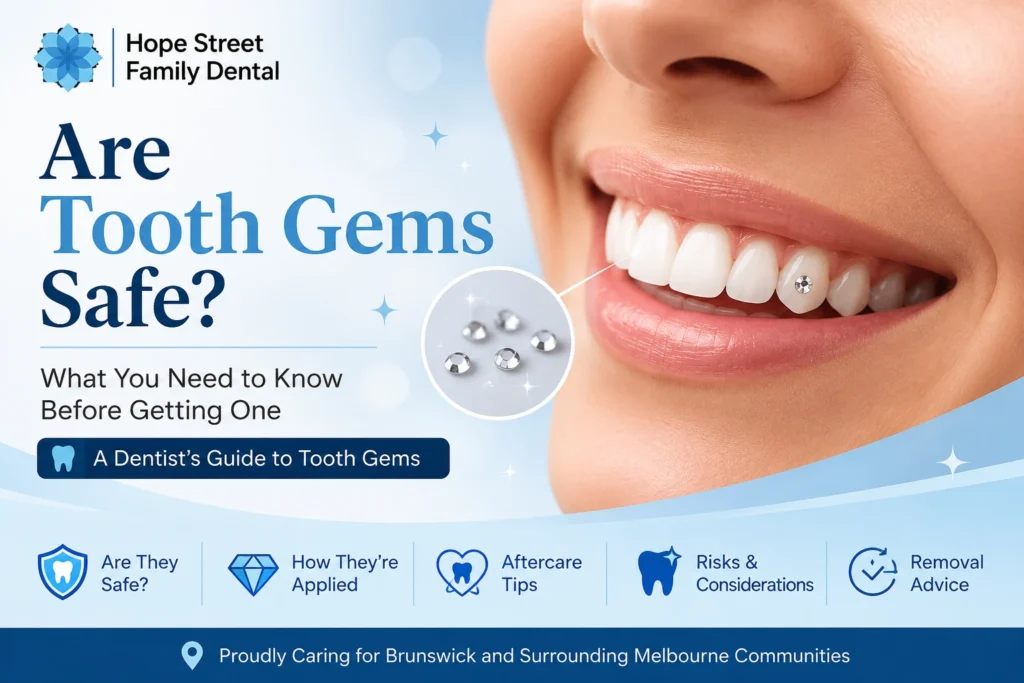
Tooth gems can be a cosmetic way to add sparkle to your smile, but they aren’t completely risk-free.
Their safety depends on factors such as the condition of your teeth, how the gem is applied, the materials used and how well you maintain your oral hygiene.
If you’re considering tooth gems, understanding how they are applied, how to care for them and how they should be removed can help you make an informed decision.
What Are Tooth Gems?
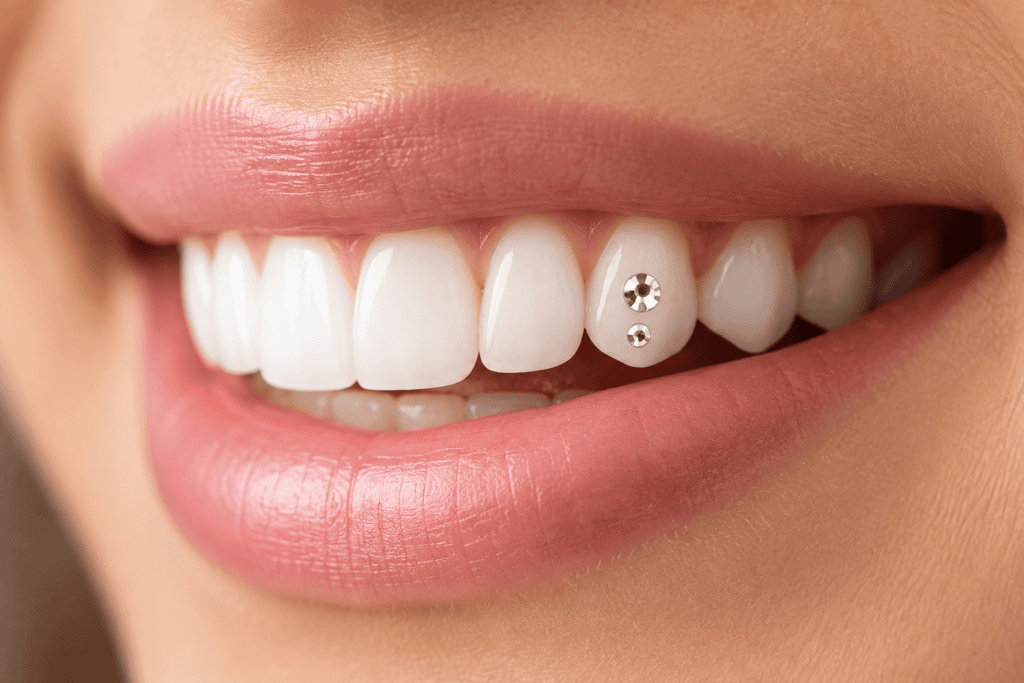
Tooth gems are small decorative crystals, jewels or other pieces of tooth jewellery that are bonded to the surface of a tooth, usually one of the more visible front teeth.
Unlike some forms of dental jewellery, a conventional tooth gem is generally attached to the tooth rather than drilled into it. The process is intended to be cosmetic rather than restorative.
The gem is bonded to the tooth using an appropriate dental bonding material. A dental professional should first assess the tooth to make sure it is suitable for the procedure.
Tooth gems are designed to add a decorative element to your smile. They do not improve the health, strength or function of your teeth.
Are Tooth Gems Safe for Your Teeth?
Tooth gems are not automatically harmful, but they should not be considered completely risk-free either.
Professional application can help reduce some of the risks associated with inappropriate materials, poor placement and incorrect removal. However, the presence of a gem can make the area around the tooth more difficult to clean, potentially allowing plaque or food debris to accumulate.
Possible concerns associated with tooth gems include:
- Plaque accumulation around the gem
- Tooth discolouration
- Gum irritation
- Tooth decay
- Damage to enamel
- Chipping or damage if the gem is knocked or handled incorrectly
- Problems caused by inappropriate adhesives or materials
Professionally applied tooth gems may be relatively safe but can still carry risks such as enamel damage, discolouration, gum inflammation and tooth decay.
The American Dental Association takes a more cautious position and advises against cosmetic tooth gems and jewellery because of potential negative oral-health outcomes.
For this reason, anyone considering a tooth gem should discuss their individual circumstances with a dental professional first.
Can Tooth Gems Damage Your Teeth?
A properly applied tooth gem does not necessarily mean your tooth will be damaged. However, problems can occur if the gem is poorly positioned, incorrectly bonded or difficult to clean around.
One of the main concerns is plaque build-up.
A tooth normally has a relatively smooth surface that can be cleaned with regular brushing and flossing. Adding a small piece of jewellery creates another area around which plaque and food particles can collect.
Over time, poor cleaning could contribute to:
- Tooth decay
- Gum irritation
- Bad breath
- Discolouration
- Other oral-health problems
The material used to attach the gem and the technique used during application also matter.
This is why putting something on your teeth should not be treated in the same way as applying a cosmetic accessory to your skin.
Can Tooth Gems Cause Cavities?
Tooth gems do not automatically cause cavities, but poor oral hygiene around a tooth gem can increase the risk of plaque accumulation and associated dental problems.
The area around the gem can be more difficult to clean, particularly if excess bonding material is left around the edges.
If you already have tooth decay, gum disease or another dental problem, it is important to have it assessed before considering cosmetic treatment.
A healthy foundation is more important than the appearance of the gem itself.
How Are Tooth Gems Applied?
The exact procedure can vary depending on the type of gem and the dental professional applying it.
Generally, the process involves several steps.
1. Dental assessment
Your dentist assesses your teeth and gums and determines whether the proposed tooth is suitable.
2. Tooth preparation
The tooth is cleaned and prepared for the bonding process.
3. Gem selection
You can discuss the size, shape and appearance of the gem you would like.
4. Professional bonding
The gem is positioned and attached to the tooth using an appropriate bonding material.
5. Aftercare advice
Your dental professional can explain how to brush, floss and care for the area around the gem.
A professional assessment is particularly important because a dentist can identify existing dental problems that may not be obvious when looking in the mirror.
Are DIY Tooth Gems Safe?
DIY tooth gems are not recommended.
It can be tempting to purchase an online tooth-gem kit and apply the gem yourself. However, you may not know whether the tooth is suitable, whether the adhesive is appropriate for use in the mouth or whether the gem has been positioned correctly.
Dr Aziz advises against DIY tooth-gem kits because of concerns including inappropriate materials, poor adhesion and potential damage or decay if the tooth has not been properly assessed or prepared.
Using household glue or non-dental adhesives on your teeth is particularly inappropriate.
If you are considering tooth jewellery, talk to a qualified dental professional rather than attempting to apply or remove it yourself.
How Long Do Tooth Gems Last?
There is no single timeframe that applies to every tooth gem.
How long a gem remains attached can depend on factors such as:
- The type of gem
- The bonding material
- Where it is positioned
- Your eating habits
- Oral hygiene
- Teeth grinding or clenching
- Your individual mouth environment
Some tooth gems may remain attached for months, while others may come loose sooner. Hope Street Family Dental notes that they may remain attached for months or even longer, but longevity varies significantly between individuals.
A tooth gem should not be considered a permanent part of your tooth.
How Should You Clean Your Teeth With a Tooth Gem?
Good oral hygiene becomes especially important when you have a tooth gem.
You should continue your normal dental hygiene routine, paying particular attention to the area surrounding the gem.
Helpful tooth gem aftercare tips include:
Brush twice a day.
Continue brushing your teeth thoroughly with a fluoride toothpaste.
Clean around the gem carefully.
Make sure plaque and food debris are not allowed to accumulate around its edges.
Continue flossing.
Flossing helps clean areas that your toothbrush cannot reach.
Don’t pick at the gem.
Repeatedly touching, twisting or pulling it can loosen the bonding material or damage the tooth.
Attend regular dental check-ups.
Your dentist can check the health of the tooth and surrounding gums during your routine appointments.
If your dentist gives you specific aftercare instructions, follow those recommendations.
What Happens If a Tooth Gem Comes Off?
If your tooth gem becomes loose or falls off, don’t try to glue it back on yourself.
Avoid using household adhesives or attempting to scrape remaining material from your tooth.
If you notice roughness, leftover bonding material, sensitivity or irritation after the gem comes off, arrange an appointment with your dentist.
A dental professional can assess the tooth and determine whether any remaining material needs to be professionally removed.
How Are Tooth Gems Removed?
Tooth gems should ideally be removed by a dental professional rather than being pulled, scraped or picked off at home.
Depending on the bonding material and condition of the gem, a dentist can use appropriate instruments to remove the jewellery and any remaining bonding material while taking care of the underlying tooth surface. We similarly recommend professional removal when a tooth gem does not come off naturally.
Never try to force a tooth gem off your tooth.
Trying to remove it yourself could cause unnecessary damage to the tooth or enamel.
Who Should Avoid Tooth Gems?
Tooth gems may not be appropriate for everyone.
A dental assessment is particularly important if you have:
- Untreated tooth decay
- Gum disease
- Damaged or weakened teeth
- Significant tooth sensitivity
- Enamel problems
- Existing dental restorations in the proposed area
- Difficulty maintaining good oral hygiene
Your dentist can assess your individual oral health and discuss whether a tooth gem is appropriate for you.
If there is an existing dental problem, it may be better to address that problem before considering cosmetic tooth jewellery.
Tooth Gems and Braces
If you wear braces or other orthodontic appliances, don’t assume that you can safely add a tooth gem.
A tooth gem can potentially interfere with orthodontic treatment, cleaning or the placement of orthodontic components.
If you are undergoing orthodontic treatment, speak with your orthodontist or dentist before considering any type of tooth jewellery.
Are Tooth Gems Worth It?
That depends on what you want from your smile.
Tooth gems are purely cosmetic. They can provide a temporary decorative change, but they do not improve the health or function of your teeth.
If you love the look of a tooth gem, the most important consideration should be how you can achieve the look without compromising your oral health.
Professional advice can help you understand the potential risks and determine whether the treatment is appropriate for your teeth and gums.
Tooth Gems in Melbourne: What Should You Look For?
If you’re searching for tooth gems in Melbourne, don’t choose a provider based solely on price or appearance.
Before having anything attached to your teeth, consider:
- Whether your teeth and gums will be assessed first
- What materials will be used
- Who will apply the gem
- How the gem will be removed
- What aftercare advice you’ll receive
- Whether you can continue maintaining good oral hygiene
- What happens if the gem becomes loose or causes irritation
A dental practice can assess your oral health and help you understand the potential risks before you make a decision.
For patients in Brunswick and surrounding Melbourne suburbs, Hope Street Family Dental provides a range of general and cosmetic dental services and can discuss your individual dental needs during a consultation.
The Bottom Line: Think About Your Teeth Before the Sparkle
Tooth gems can be an appealing cosmetic trend, but your oral health should always come first.
The safest approach is to understand the potential risks, avoid DIY application and removal, maintain excellent oral hygiene and speak with a dental professional before putting anything on your teeth.
If you’re considering tooth gems and want professional advice, Hope Street Family Dental in Brunswick can assess your oral health and help you make an informed decision about your smile.
Book an appointment with Hope Street Family Dental to discuss your dental needs.
Frequently Asked Questions About Tooth Gems
They can. The risk depends on factors including application, bonding materials, placement and removal. Attempting to remove a tooth gem yourself can increase the risk of damaging the tooth surface.
A tooth gem does not automatically cause a cavity, but plaque and food debris can accumulate around it if the area is difficult to clean. Maintaining good oral hygiene is essential.
There is no guaranteed timeframe. Some may remain attached for months or longer, while others may come off sooner depending on the individual and the application.
Yes. Maintaining good oral hygiene is particularly important when you have a tooth gem. Brush twice daily and carefully clean around the gem.
In general, you should continue your normal flossing routine and take care when cleaning around the tooth gem.
Yes. A dentist can assess the gem and use appropriate techniques to remove it. Avoid pulling or scraping it off yourself.
DIY tooth gems are not recommended. You may not know whether the tooth is healthy enough, whether the materials are suitable for intraoral use or whether the gem has been applied correctly.
You should speak with your dentist or orthodontist first. A tooth gem may interfere with orthodontic treatment or make cleaning more difficult.
A dental professional can assess your teeth and gums and discuss whether cosmetic tooth jewellery is appropriate for you. Hope Street Family Dental in Brunswick can discuss your individual oral-health needs during a dental consultation.